
It Really Is That Deep
Happy National Book Lover Day to All Deep Thinkers, Feelers, and Readers!

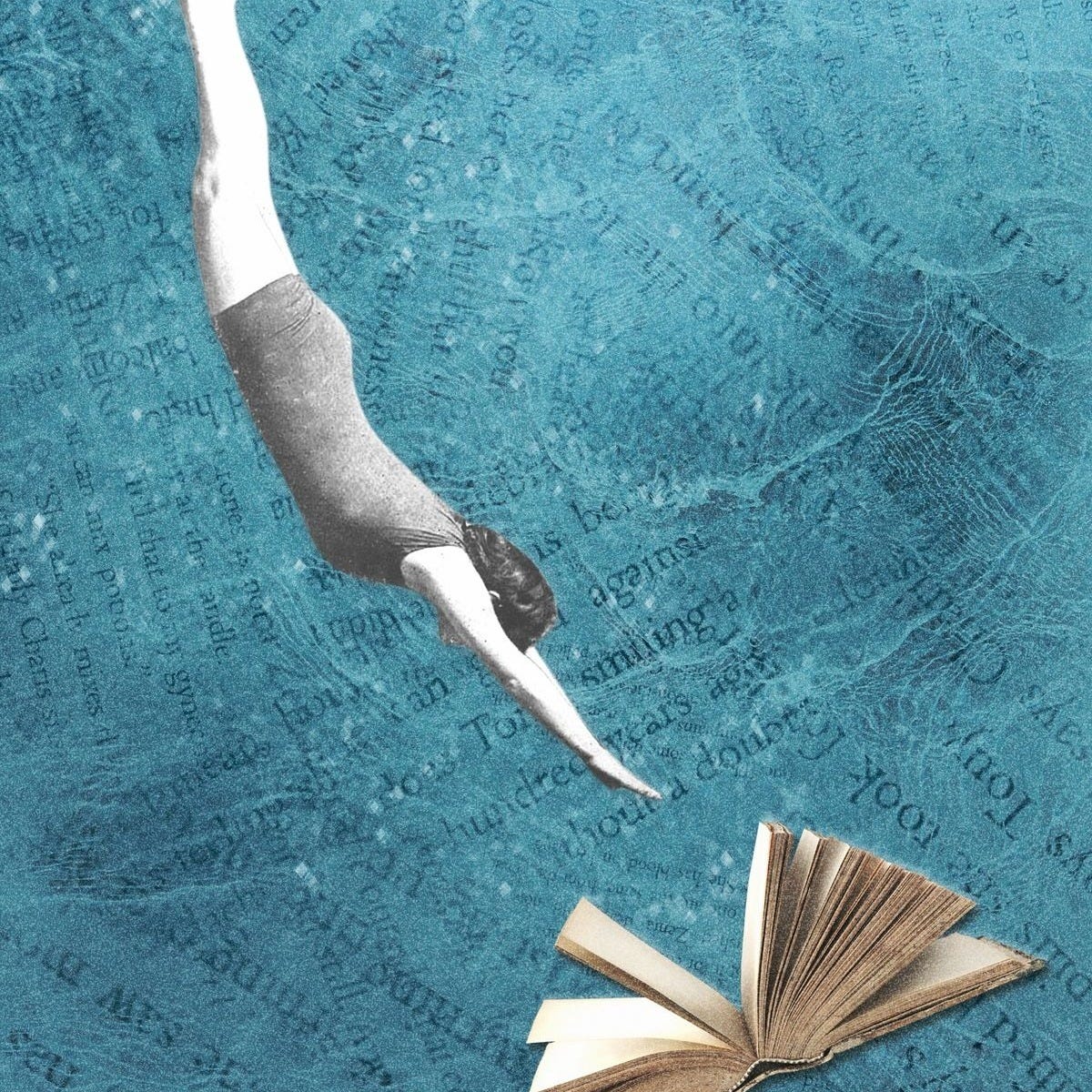
There are a couple of expressions that have become popular recently, which are used to respond to a person who seems to be thinking too much, feeling too much, or caring too much about something. These similar sentiments are “It’s not that serious” and “It’s not that deep.” In reaction to these dismissive statements, people will sometimes respond with, “It is that deep.”
This disagreement over how much to care about something has me thinking as I head back into the classroom tomorrow. As I was processing what I’d like to communicate to my high school English students this year, I laughed when I saw this on Pinterest:
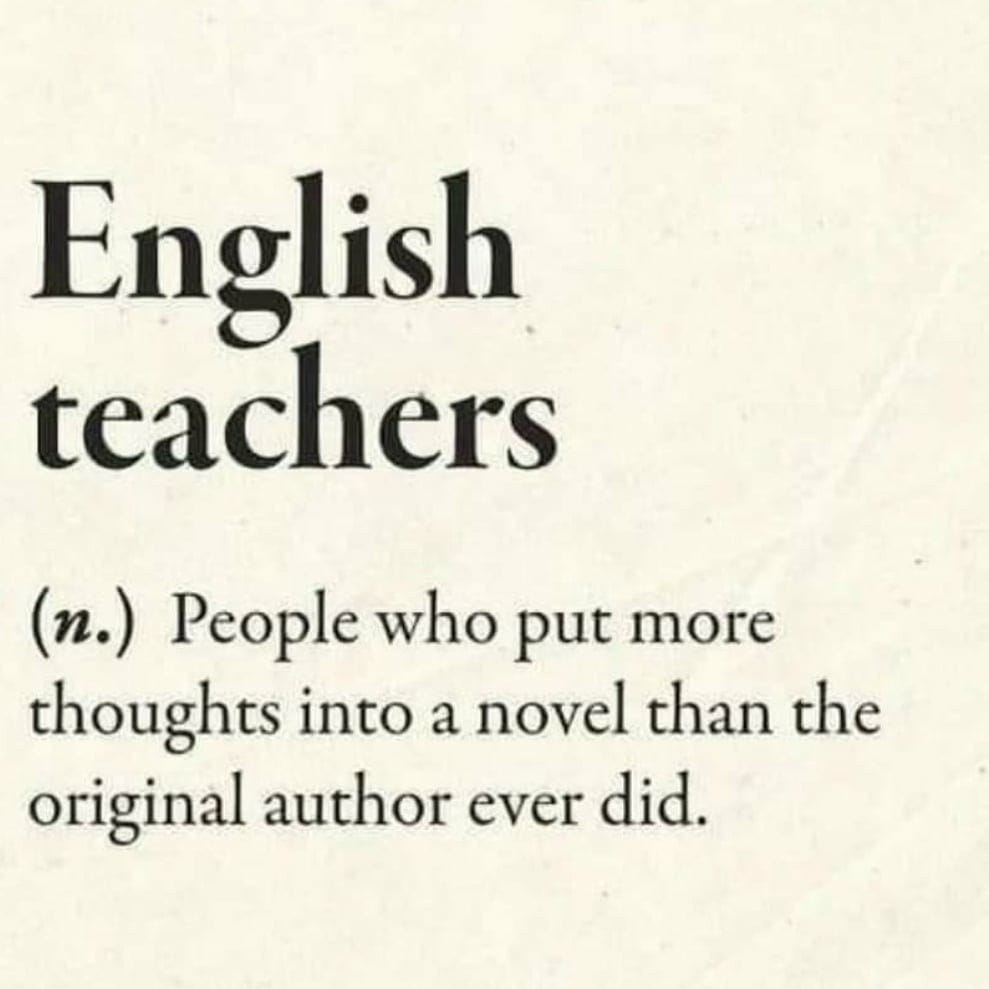
This humorous “read” of English teachers as overthinkers made me smile as I thought about all the times in 18 years of teaching high school and college when students have looked at me like I was crazy coming up with some analysis of books. As I have explained the meaning of different symbols and literary devices, some kids have looked at me as if to say, “It’s not that deep.” Sometimes, students get self-conscious trying to analyze works in front of each other because they realize that they might seem like “try hards.” The term “try hard” is decidedly not a compliment. Much like “teacher’s pets,” these are the kids who show interest in and excitement for digging into schoolwork. So uncool. And we live in a world obsessed with cool.
I was recently talking to the 12-year-old daughter of a friend who is so bright, vivacious, and a voracious reader. She told me that she was sometimes worried about speaking up in class because she didn’t want classmates to think she was trying too hard.
I saw so much of myself in this young girl who had spent 15 minutes asking me for good book recommendations. I have often been called an overthinker, overly emotional, too sensitive, and too passionate. I’ve often wished that I could play life cool. What I realized, though, is that the world doesn’t need any more people pretending that things aren’t that serious, that beautiful, that profound, that tragic, or that hilarious. Certainly, I have sometimes struggled with overthinking when it comes to worries and anxieties, and this is not helpful. It can also be harmful when we give something silly an undue amount of effort or importance. But I believe that my job as a teacher is to show my students that when it comes to reading, there is no such thing as too much thought or care.
Great authors spend years pouring incredible thought, passion, and effort into every line of their work to give us all a treasure map. As we read these works, we have the incredible opportunity to dig in deep and look for as much treasure as we can find. The meaningful lessons, examples, and possibilities that we find can be applied to life in ways that make the world a better place. This is how books save us. We think that there is something so wrong with the world, ourselves, or our neighbors that it can never be put right. And then we read, and find answers to these problems which we never imagined from someone who dealt with the same thing 3,000 years ago, or in a different country, or who we had assumed was only writing about dragons but was really writing about our lives.
Sometimes, book lovers will even find things the original author didn’t even notice or intend because when it comes to great stories, there are so many layers to discover. And, I can read the same book or play at a different point in my life and find completely different truths than I did when I was a different version of myself in a different stage of life.
There is another slang term that I actually like a lot. The term is “chalant,” and it means someone is acting the opposite of nonchalant. They care deeply about and are not indifferent to the important things that surround them. They take their relationships, their work, and their lives seriously. If I can encourage young people to be chalant about books, I will feel like I have succeeded as a teacher. And the desire to encourage fellow “overthinking” book lovers that there is no such thing as overthinking is why I love writing and reading here on Substack.
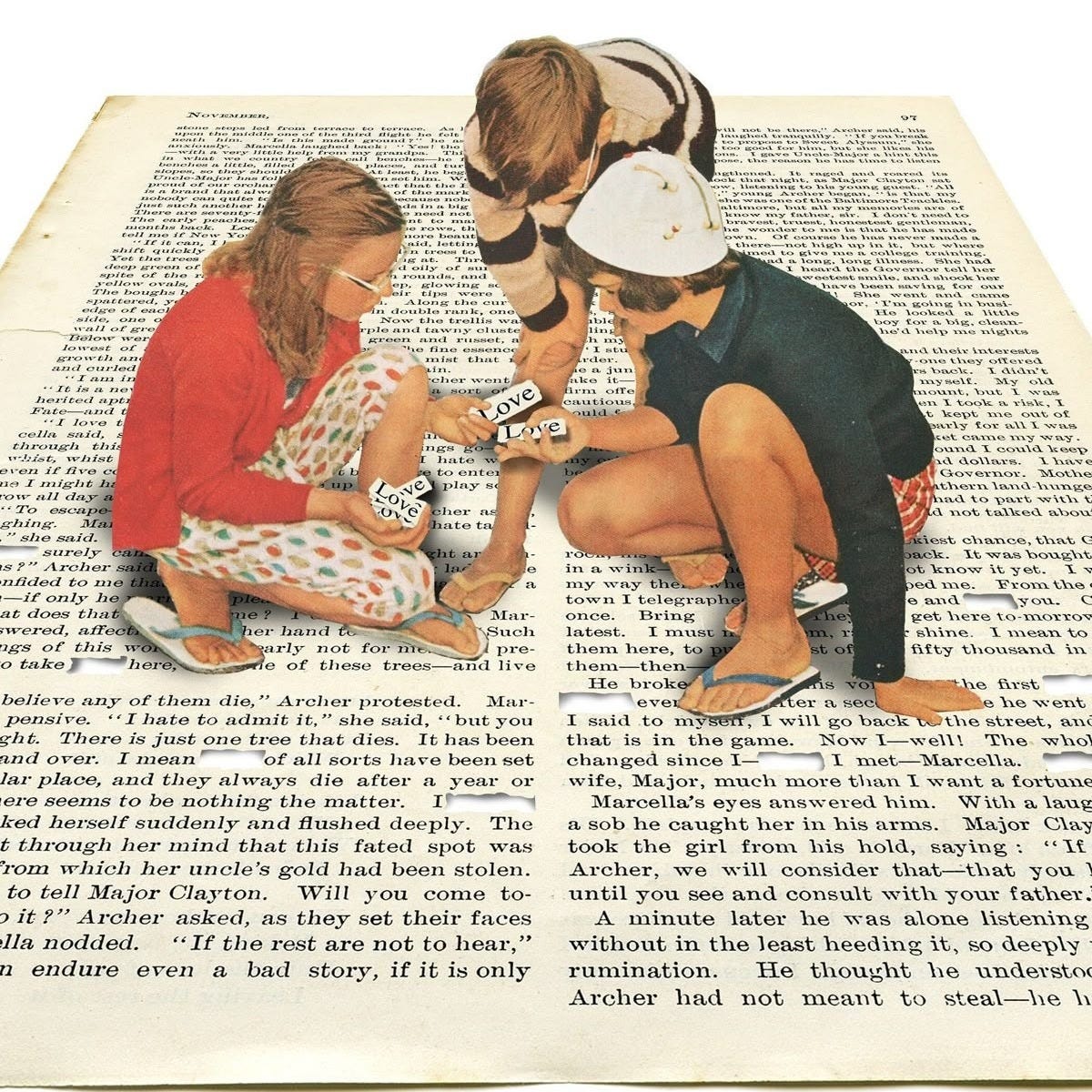
(Image by Toon Joosen)
Today, August 9th, is National Book Lover Day. Here at Books May Save Us, every day is a celebration of passionate and thoughtful love of reading. It doesn’t need to be a classic, although they are full of treasure, to be an important and life-changing book. And, beyond the specific text, the act of reading and digging for truth, hope, goodness, love, and beauty is what changes us. And there are so many books being written now in different genres, languages, and styles that will no doubt be classics someday. In fact, classics didn’t start that way. They were not written to be intimidating tomes that only great academics and scholars could appreciate and understand. And this leads me to my other goal this year in my teaching and here on Substack. I want to remind people of their own capacity to be deep: to have a rich imagination, inner life, strong analytical mind, thoughtful responses, and profound feelings.
Sometimes I hear students and many other people in my life say that they are just not that smart, or aren’t good at reading, or can’t write well, and I want to remind them that they are an incredible work of art made in the image of God to think, create, and express themselves with brains that are an absolute marvel. We are so afraid that AI is trying to replace us, but AI can’t replace that. The human brain, every human brain, is capable of such interesting, creative, and surprising ways of seeing, understanding, and analyzing.
If school is just about multiple-choice questions about what happened in a book, then a machine can succeed faster. If the goal is to read, succeed on a test, and then forget every word read, then using AI makes sense. But if you are asked to read a story, then dig into the text and see what you can learn that can change your life, and you believe it can change your life, then that’s not something you would ever want to outsource.
Letting people know that books aren’t just for school, and school isn’t just for grades, is why I am passionate about teaching my students to love books. And it’s why I love this community of book lovers on Substack. I hope that none of you will ever feel bullied by the world into stopping asking questions, passionately discussing, and thoughtfully reading. Our world needs people who care and care about things that matter because it really is that deep, and so are all of you.
Thank you so much for reading, and I hope you will consider subscribing or becoming a paid subscriber to help support this work!
I don’t want to put written content or comments behind paywalls because I believe that this work is for the whole community. But I also want to give a huge thank you to my paid supporters!
So, my husband illustrated the original art printed on these eco-friendly organic cotton twill tote bags pictured below.
If you are already a founding member or annual subscriber, or if you become one, we will be sending you one of these tote bags. They will be shipped starting on October 15th.
If you are or become a monthly paid subscriber, we will ship your tote bag after six months of membership.
Thank you all!

I couldn’t agree with you more. Wonder if you’ve ever seen Alan Bennett’s The History Boys? It illustrates your point - two teachers - one teaching the boys to think and feel and learn ‘by heart’. The other to help them pass Oxbridge entrance exams!
Resonated with your sentence: “The world doesn’t need any more people pretending that things aren’t that serious, that beautiful, that profound, that tragic, or that hilarious.” Thank you for that reminder.