
Scope for the Imagination
Living like "Anne with an E"

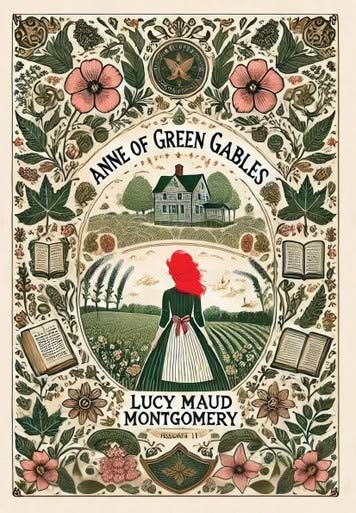
I’m currently listening to actress Kate Burton’s fantastic audiobook of Lucy Maud Montgomery’s classic Anne of Green Gables, and it’s given me “scope for my imagination” for this week’s article. I’ve loved the stories about “Anne with an E” since I was a child, and I have always related to her obsession with books and theatrical nature. Now, as an adult who, like Anne, grew up to teach young people, I have a newfound respect for the ways she uses her book-fueled inspiration to make her world a better place, not only for herself, but for her community.
When Anne is young, her world is full of grief, loss, loneliness, and mistreatment. Her imagination is an incredible defense and a force field of protection around her sensitive heart and mind. When she is alone, she imagines friends in the mirror; when she is bored, she imagines she is in a romantic tragedy, and when she is bullied, she imagines herself beautiful and powerful.
Later on, when she is sent to a safe and happy home in Avonlea, she holds firmly to her imagination, but also shares it with the “kindred spirits” of friends and found family around her. She doesn’t change to fit in but rather changes her community to fit the beautiful world in her imagination, and these changes benefit everyone. She is not forcing people to entertain or serve her desires, but rather helping them to embrace their own childlike passions, hopes, and dreams. The strict and sensible are no match for her joy-infused perspective on life. And it is no surprise she grows up to be a teacher and writer because she is so clearly called to broaden the horizons of everyone she encounters.
This is what got me thinking this week about the power and responsibility that imaginative bookworms have in the world. Instead of using our imagination and love of stories to avoid or escape reality, what if we share the gift of imagination with others? Please don’t get me wrong. I love a little escape into a book world, and I will happily daydream during a meeting that could have been an email. It’s just that I worry that this desire to escape can be used against us and keep us from helping each other. Now, with technology demanding that we spend an hour or eight or twelve in the escape rooms they create for us, reality is left to fend for itself. The desire of good people to make a good world begins to dull while we are being entertained. Imagination, at its worst, can take people away from the world like the drug Soma in Brave New World. But, at its best, imagination is the very thing necessary to make reality better, as it gives a blueprint for what the world could be.
When I was little, I had a small army of imaginary friends. And there were times that these friends in my mind were only for my enjoyment, and I could be very bossy and controlling over the world I made in my head. Once my mom walked into an empty room to see me standing on a chair and seriously threatening the air, “I made you up, and I can make you disappear!” Yikes. This kind of attitude reminds me that I am still too quick to want to live in a world that never causes me any problems or challenges. And, if I’m being honest, this is why I enjoy the curated world that algorithms create for me.
There is a much more positive thing I used to do with my imaginary friends when I was young. I would introduce them to my real friends. I would invite my school and church friends to join me in my imaginary world, and then I would ask them what they wanted to do, change, or create there. Like Anne pretending to be the Lady of Shallot with her friends and going down the lake in a canoe that they laid her to rest on, I created circuses, fairy tales, and all kinds of other scenarios with my friends.
They weren’t all winners. I created a game called “Safety,” which involved me sitting on the couch with my little brother and pretending that the floor was a shark-infested ocean. The only rule was to stay safely on the boat. My poor, bored sibling would give up and jump onto the carpet and pretend to be attacked while I got upset.
It was easy to make up these games and worlds because I was a reader. Everything that happened in my books felt as real to me as the things that were happening when I put the book down.
Right now, our world has a great need for imagination. Our imaginations are being used against us as we are bombarded with constant updates on our devices about all of the terrible things happening and all the reasons there is nothing we can do about them. Anxiety is rampant, and people feel tired, depressed, lonely, and overwhelmed. Meanwhile, it’s easy to forget that we are built to imagine alternatives, solutions, and possibilities.
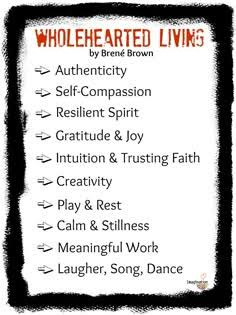
Brené Brown has talked about the need for imagination that leads to risk-taking, creativity, and curiosity that can make our institutions and businesses work so much better. Many of the elements of living in a way that she believes is most healthy and happy (shown in the image above) involve imagination. So many of these imaginative skills like play, gratitude, and creativity are natural in small children. As Pablo Picasso says, “All children are artists. The problem is how to remain an artist once we grow up.” Teachers are seeing the ways that children are giving up their imaginations younger and faster than ever. We see students turning to AI to think, create, write, and read for them because they don’t see the value in their human imagination.

Albert Einstein said that “Imagination is more important than knowledge.” But we’ve been told that knowledge, information, and data are what matter most, and machines are faster at accessing these things. Einstein was right, though, because knowing more about how things are is helpful, but imagining how they can be is essential.
Let’s keep reading, imagining, and then sharing those dreams, ideas, hopes, and plans with others. This is how books may save us - one daydream at a time.
Thank you so much for reading this article. I’m so grateful for each and every one of you. If you would like to support the work and writing I do here at Books May Save Us, please consider joining the community or upgrading to a paid subscription today.
Thanks so much!
This was so beautiful in so many ways, Erin! ☺️“scope for my imagination”...has long been one of my favourite expressions. Whenever I need a little Anne energy, I think of it! I wholeheartedly agree—now more than ever, we need fuel for our minds that nourishes and sustains us. And our reading is so much a part of that. I've been writing on similar themes on my Substack too (a similar theme for Monday). I've been trying to create a place of literary hospitality where we can think about and find solutions for our modern lives through books and quality reading. I love this line from your essay: "This is how books may save us—one daydream at a time." Yes—one daydream- even one day—at a time! Thank you for the inspiration! 🙏💖
I love this so much. 💗 Anne of Green Gables has always held such a special place in my heart. I love how you captured that imagination isn’t just an escape, but a gift we can use and share with others.✨